How to Choose the Right Boiler Training Course for Your Role
Choosing the right boiler training courses can shape your career, enhance safety, and boost operational efficiency—whether you’re a new boiler operator, a maintenance technician, or a facility manager.
With a wide range of training options available, it’s essential to evaluate your needs and goals before committing to a course.
Understanding Your Role and Training Needs
The first step in selecting boiler training courses is understanding your current role and where you want to grow professionally. Different positions within boiler operations require distinct skills, and the right course should align with your responsibilities.
- New Operators: If you’re new to boiler operation, seek foundational training that introduces you to boiler systems, basic controls, safety practices, and routine operation procedures.
- Experienced Operators: For seasoned professionals, advanced courses can deepen your knowledge in areas such as troubleshooting complex systems, optimizing performance, and mastering water treatment.
- Maintenance Technicians: Technicians benefit from courses focused on mechanical systems, maintenance schedules, and detailed inspection routines. They may also need modules on water chemistry and boiler room equipment.
- Supervisors and Managers: For those in leadership roles, training often emphasizes regulatory compliance, management of boiler safety programs, and operational oversight.
Knowing your level of experience and your employer’s expectations will help you choose courses that add real value rather than ones that repeat what you already know.
Key Features to Look for in Boiler Training Courses
Not all boiler training courses are created equal. When comparing options, several key features can indicate the quality and relevance of the instruction:
Comprehensive Curriculum
A quality training course should cover essential topics such as:
- Boiler system components and operation
- Safety controls and emergency procedures
- Routine inspection and maintenance
- Combustion fundamentals and heat transfer principles
- Troubleshooting common issues
Courses with a robust curriculum prepare learners for real-world scenarios rather than just textbook theory.
Practical, Hands-On Instruction
Boiler systems are complex mechanical and thermal systems. Courses that include hands-on exercises, simulations, or lab sessions help reinforce concepts by letting participants apply what they’ve learned in controlled environments.
Instructor Expertise
The background and experience of instructors matter significantly. Instructors with real-world boiler operation and inspection experience provide insights that go beyond standard coursework. They can share practical tips, safety best practices, and industry expectations that improve learners’ ability to perform on the job.
Customized and Specialized Options
Some training providers offer tailored instruction to meet specific industry needs—such as healthcare, manufacturing, and energy production. These custom boiler training courses can be invaluable when standard courses don’t address the unique challenges of your facility.
Certifications and Industry Recognition
Another critical consideration is whether the boiler training courses you choose result in a recognized certificate or professional development credit. Certifications demonstrate your commitment to professional growth and can be important for compliance, job advancement, or employer requirements.
- Accreditation: Courses recognized by industry bodies, trade associations, or safety organizations are often more respected.
- Professional Development Hours (PDHs): These credits may help you fulfill continuing education requirements for licensing or professional certifications.
- Company-Specific Recognition: Some employers prefer training from specific providers or expect that your training aligns with their internal standards.
Choosing courses that offer recognized credentials not only boosts your credibility but also increases your opportunities for advancement.
Delivery Format: In-Person vs. Online Training
Boiler training courses are available in multiple formats, and each has its advantages:
In-Person Training
- Best for hands-on learning and networking with instructors and peers
- Ideal for understanding boiler room dynamics and real equipment interaction
- Often includes lab exercises and live demonstrations
Online or Hybrid Training
- Offers flexibility for working professionals or remote learners
- May include video lessons, quizzes, and virtual simulations
- Useful for foundational theory or when travel is a barrier
Evaluate your schedule, location, and learning style when selecting a course format.
Assessing Costs and Logistics
When choosing boiler training courses, don’t overlook practical considerations such as cost, location, duration, and scheduling. While you want quality instruction, it’s also essential that the course fits your budget and calendar.
- Cost vs. Value: Higher-priced courses often include more comprehensive content or hands-on components. Balance cost with the benefits you expect to gain.
- Travel and Accommodation: In-person classes may require travel. Consider these expenses when budgeting.
- Class Schedules: Look for courses with flexible scheduling or multiple offerings throughout the year to find sessions that fit your availability.
Understanding these logistics helps you plan effectively and avoid last-minute conflicts or unexpected expenses.
Aligning Training with Career Goals
Choosing the right boiler training courses means thinking beyond immediate needs and considering long-term career goals. Whether you aspire to become a certified operator, supervisor, or technical specialist, training should propel you toward those aspirations.
- Skill Building: Select courses that expand skills relevant to future roles you envision.
- Industry Trends: Stay updated on industry standards and emerging technologies in boiler operations.
- Professional Growth: Continued training shows initiative and can set you apart in competitive job markets.
Investing time in well-planned training builds confidence and competence, enabling you to take on greater responsibility and complex challenges.
Why Choose Boisco Training Group for Your Boiler Training
If you’re ready to advance your skills with industry-leading instruction, Boisco Training Group offers a wide range of boiler training courses designed for operators, technicians, and facility personnel at all experience levels. With over 30 years of industry expertise and experienced instructors, our programs emphasize safety, operational excellence, and practical skills applicable across sectors.
Contact us at Boisco Training Group to explore available courses, view upcoming schedules, and find the training that best suits your role and career goals.
Boiler Training Courses for Hospitals: Why Proper Education is Essential for Safety and Efficiency
In the healthcare industry, few systems are as essential to daily operations as the boiler. BTG provides the best boiler training courses hospitals need to ensure systems run efficiently, safely, and in compliance with strict healthcare regulations. From providing consistent heat and sterilized water to supporting laundry and sanitation services, hospital boilers play a vital role in patient comfort, safety, and care. That’s why proper boiler operator training and regular maintenance are non-negotiable in hospital settings.
The Importance of Proper Boiler Operator Training and Maintenance Within Hospitals
At BTG, we understand the critical nature of these systems and the responsibility that comes with managing them. Our boiler training for hospitals focuses on equipping operators with the knowledge and skills needed to prevent issues before they arise and to keep hospital systems performing at their best.
The Potential Issues If Boilers Are Not Maintained Properly
When boiler systems are not properly maintained or operated by trained personnel, hospitals face serious risks. Mechanical failure can lead to system downtime, loss of heat or hot water, and even critical equipment malfunctions. In extreme cases, boiler issues can compromise patient care or cause dangerous situations involving pressure build-up or leaks.
Beyond the immediate safety concerns, poor maintenance also leads to inefficiencies that drive up operating costs. Energy waste, frequent repairs, and shortened equipment lifespan can significantly impact a hospital’s bottom line. Proper boiler training for hospitals helps operators recognize early warning signs, perform preventative maintenance, and manage systems to minimize costly downtime or safety hazards.
The Boiler Training Courses Hospitals Need for Their Boiler Operators
BTG provides comprehensive boiler training classes and boiler training courses designed specifically for the healthcare sector. Our programs cover everything from basic boiler operation to advanced troubleshooting and energy management techniques.
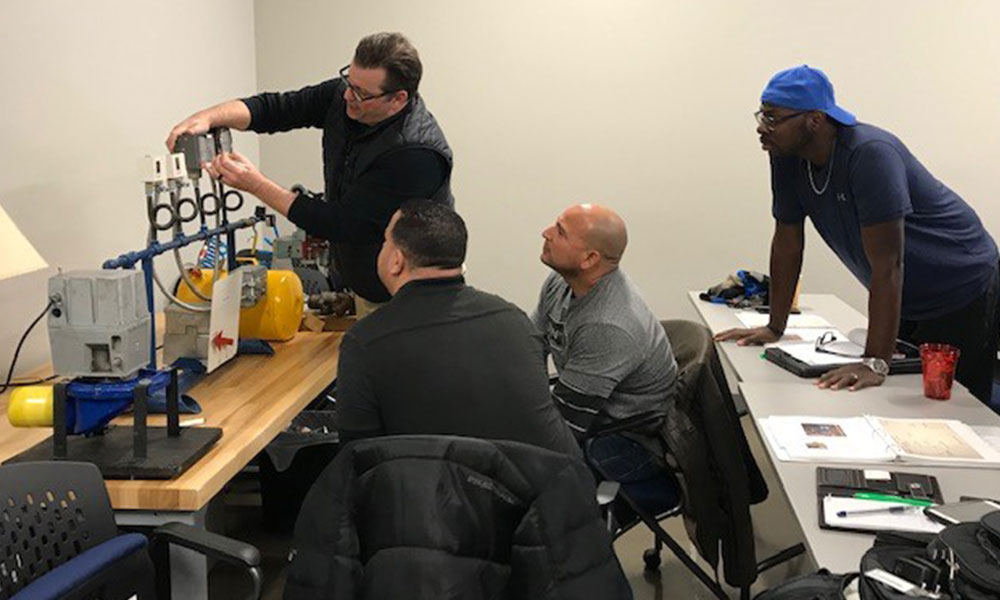
These hands-on classes teach operators how to properly monitor pressure systems, maintain water quality, identify efficiency losses, and comply with regulatory standards. Whether a hospital is looking to upskill an experienced operator or train a new staff member, BTG’s flexible training options can be tailored to meet specific facility needs.
Our boiler training courses combine classroom instruction with real-world application, ensuring participants leave with a practical understanding of both the theory and the day-to-day demands of managing a hospital boiler system.
The Benefits of These Classes for the Boiler Operator and the Hospital Itself
The benefits of BTG’s boiler training courses for hospitals go far beyond the classroom. For operators, these courses build confidence, enhance professional skills, and open opportunities for career growth. For hospitals, the return on investment is even greater — improved safety, reduced energy costs, and extended equipment life are just the beginning.
Trained operators are more capable of detecting inefficiencies early, addressing minor issues before they become major repairs, and maintaining regulatory compliance. This proactive approach helps hospitals reduce unexpected outages and ensure uninterrupted patient care.
Partner with BTG for Reliable Hospital Boiler Training Solutions
When it comes to hospital safety and efficiency, boiler systems are too important to overlook. Proper operator education is the foundation of dependable boiler performance. BTG’s boiler training classes and boiler training courses provide the tools, knowledge, and confidence your staff needs to operate safely and efficiently.
If your hospital is ready to invest in high-quality boiler training for hospitals, contact BTG today to learn how our programs can improve system performance, extend equipment life, and keep your operations running smoothly.
Professional Training for Boiler Operators
Boiler systems are the heart of many industrial operations, and keeping them running efficiently and safely requires proper water treatment. Boisco Training Group (BTG) offers a focused Water Treatment & Testing course that provides training for boiler operators. It gives boiler operators the knowledge and hands-on skills they need to maintain peak performance and prevent costly failures.
Boisco Training Group’s Water Treatment Course
The course begins by answering a key question: *Why do we test?* This section lays the foundation by explaining how water quality impacts the entire boiler system. Operators learn how poor water conditions can lead to corrosion, scaling, and equipment damage. Understanding this “why” is essential—it motivates proper testing and consistent monitoring.
Pre-Treatment Strategies
From there, the course moves into Pre-Treatment strategies. Feedwater must be treated before entering the boiler to remove impurities. Without proper pre-treatment, minerals and other contaminants can cause significant issues, shortening the life of the equipment and reducing efficiency.
Internal Boiler and Condensate Treatment
Next comes Internal Boiler & Condensate Treatment. This section explains how and where chemical treatments are introduced within the boiler system. Students learn the importance of protecting the internal components and keeping the condensate return system clean. This part of the training emphasizes not just system function, but long-term sustainability.
Hands-On Lab and Testing
Perhaps the most valuable part of the BTG course is its Hands-On Lab & Testing. This isn’t just theory—students work with real water samples and testing tools to build practical skills. It’s a chance to reinforce classroom learning through real-world application. That kind of experience is hard to find and highly valuable on the job.
Why Training for Boiler Operators Are Important
Why does this kind of training matter? Because boiler operators are responsible for systems that affect safety, efficiency, and operating costs. Mistakes can lead to expensive downtime or even hazardous conditions. Solid training helps prevent those risks by equipping operators with the right tools and knowledge.
The Water Treatment & Testing course from Boisco Training Group is more than just a class—it’s an investment in operational excellence. By teaching both the science and the hands-on techniques behind water treatment, BTG helps boiler operators protect their systems, save money, and operate safely.
Interested in learning more or enrolling in the next class? Check the class schedule.
Continuing Boiler Education in an Evolving Industry
In the ever-evolving boiler industry, the importance of continuing boiler education is undeniable. As technological advancements and industry regulations perpetually shift, professionals must stay updated to ensure efficiency, safety, and compliance. Ongoing training serves as a critical tool for maintaining and enhancing the skills required to navigate these changes successfully.
BTG Is a Premier Training Group for Continuing Boiler Education
At BTG, we know that the benefit of continuing education extends beyond technological and regulatory compliance. It fosters a culture of lifelong learning, encouraging professionals to seek improvement and stay ahead of the curve.
By investing in training, companies can enhance employee productivity, reduce turnover, and build a skilled workforce capable of tackling future challenges. Check our schedule of training classes, and sign up today.
Industry Regulations
For instance, emissions regulations have become increasingly strict, necessitating the adoption of cleaner technologies and practices. Training programs highlight the best practices for reducing emissions and adhering to environmental guidelines. Additionally, they cover safety protocols that protect workers and prevent accidents, fostering a safer workplace environment.
Alongside technological advancements, the boiler industry is subject to stringent regulations aimed at ensuring safety and environmental protection. These regulations are frequently updated to reflect new standards and practices, making it imperative for industry professionals to stay informed. Continuous education serves as a vital means to keep pace with regulatory changes, helping professionals understand and comply with the latest requirements.
Technological Advancements
The boiler industry has experienced significant technological progress over the years. From the development of energy-efficient boilers to the integration of smart technologies, these advancements are revolutionizing how boilers operate and are maintained.
For professionals in the field, staying abreast of these innovations is essential. Continuous education programs provide the knowledge and expertise necessary to understand and implement new technologies, thereby improving operational efficiency and reducing downtime.
Boiler Operator Training Is Indispensable
In the realm of industrial operations, the role of a boiler operator is indispensable. Therefore, boiler operator training is indispensable too. Boilers are central to the functioning of various industries, including power generation, manufacturing, and heating systems.
Given the critical nature of these systems, it is paramount that boiler operators receive comprehensive training to ensure their efficient and safe operation. This training is available from Boisco Training Group. Check our schedule for Boiler Operator Classes.
Investing in boiler operator training is a strategic decision that pays dividends in safety, efficiency, reliability, and regulatory compliance.
Safety First
The foremost reason for thorough boiler operator training is safety. Training equips operators with the knowledge to recognize potential hazards, understand safety protocols, and swiftly respond to emergencies. It covers essential areas such as understanding boiler components, correct startup and shutdown procedures, and routine maintenance practices. By being well-versed in these areas, operators can prevent accidents before they occur and respond effectively in the event of an emergency.
Enhancing Efficiency
Efficiency is another critical aspect of boiler operation. Boilers are significant energy consumers, and even minor inefficiencies can lead to substantial cost increases over time. Properly trained operators can optimize boiler performance, ensuring that the system runs at peak efficiency. This includes understanding the importance of regular maintenance, tuning combustion controls, and identifying and rectifying operational anomalies.
Ensuring Reliability
Unplanned boiler downtime can disrupt production schedules, lead to financial losses, and damage a company’s reputation. A deep understanding of boiler systems allows operators to anticipate potential failures and take proactive measures to avoid them. This predictive approach is far more effective and cost-efficient than reactive maintenance, where issues are addressed only after they cause significant disruptions.
Compliance with Regulations
Finally, boiler operator training is indispensable because it ensures compliance with industry regulations and standards. Regulatory bodies mandate specific training and certification requirements for boiler operators to ensure public and workplace safety. Adhering to these regulations is not just a legal obligation but also a best practice that underscores a company’s commitment to safety and excellence.
Why Boiler Training Classes Are Essential for Safety Compliance
Boiler systems play a vital role in various industries, from heating buildings to powering machinery. However, they also pose significant safety risks if not operated and maintained correctly. Given these risks, proper boiler training classes are essential for ensuring safety compliance and preventing accidents.

Legal Standards and Regulations
Numerous legal standards and regulations govern the operation of boilers, primarily to safeguard public health and safety. In the United States, the Occupational Safety and Health Administration (OSHA) and the American Society of Mechanical Engineers (ASME) set forth guidelines that outline operational and safety requirements for boiler systems. These regulations ensure that only trained personnel handle the complexities of boiler operations, thus minimizing risks associated with improper use.
Safety Standards
Boilers operate under high pressure and temperature, creating an environment ripe for potential hazards. Problems can include explosions, leaks, and mechanical failures. Proper boiler training equips operators with the knowledge to identify and mitigate these risks.
At BTG, our well-structured training program emphasizes the importance of regular maintenance. We teach operators to recognize the signs of wear and tear that could lead to dangerous failures. Trainees learn about essential safety protocols, such as understanding pressure gauges and checking safety valves. We also include training on routine inspections and maintenance checks.
Emergency Preparedness
Proper training goes beyond routine operation and maintenance; it also prepares operators for emergency situations. Understanding how to respond effectively during incidents can make a critical difference in minimizing harm.
BTG Boiler Training Classes Are Essential to Your Safety and Success
Investing in comprehensive boiler training is a fundamental aspect of safety compliance that protects both employees and equipment. Ultimately, when it comes to boiler operation, knowledge is not just power—it’s a necessity for your safety and success. See our schedule of boiler training for available classes. Register and pay online.
Proper Training for Boiler Operators
Professional boiler operator training is crucial for the operation of boiler systems in various industrial, commercial, and institutional settings. Boilers are complex and potentially hazardous equipment that require specialized knowledge and skills to operate properly. Proper training for boiler operators equips them to safely operate, maintain, and troubleshoot boiler systems. This reduces the risks of accidents and ensures a safe working environment for all.
Training Mitigates Risks
Improper operation of boilers can lead to serious accidents. This can include explosions, fires, and toxic gas leaks, which can result in injuries, fatalities, and property damage. By investing in proper training for boiler operators, organizations can:
- mitigate risks
- prevent accidents
- safeguard personnel
- optimize the performance of their boiler systems
- maximize the longevity and efficiency of boiler systems
- ensure compliance with industry regulations
Proper Training for Boiler Operations Optimizes Efficiency
An important aspect of professional boiler operator training benefits the company using the boilers. Well-trained operators are able to effectively:
- manage boiler operations
- monitor performance indicators
- make adjustments as needed to maximize energy efficiency and minimize operating costs.
By understanding how to operate boilers in a safe and efficient manner, trained operators can help organizations save money. Savings come in the form of reduced energy expenses and prolonged lifespan of boiler systems.
BTG Boiler Operator Training Classes
With over 30 years of experience in the boiler industry, BTG (Boisco Training Group) has the knowledge and experience to provide the best boiler training courses available. We have classes for boiler owners and operators, and for those who service and repair boilers. Our boiler training courses equip operators to troubleshoot issues, diagnose problems, and perform routine maintenance tasks. This helps prevent downtime and disruptions in operations.
Ensuring that your operators have the necessary skills and knowledge to keep your boiler systems running smoothly. Then, your organization can minimize disruptions, maintain production schedules, and meet business objectives effectively.
Training Boiler Operators by the Experts
Boisco Training Group (BTG) is the premier boiler training group in the Southeast. At BTG, we know that training boiler operators is crucial for ensuring the safe and efficient operation of boiler systems. Boilers play a critical role in providing heat, steam, and hot water for a wide range of applications, including power generation, heating, and industrial processes. Proper training helps operators understand the complex operating principles of boilers, as well as the importance of safety protocols and regulations.
Boiler Training Is Necessary to Ensure Safety
One key reason why training boiler operators is essential is to ensure the safety of both personnel and equipment. Boilers are high-pressure systems that can pose serious risks if not operated correctly.
Improper operation of boilers can lead to catastrophic accidents, such as explosions, which can result in injuries or even fatalities. By providing comprehensive training to boiler operators, companies can minimize the risks associated with boiler operations and create a safer work environment for their employees.
Boiler Operator Training Helps Maximize Efficiency
Safety is not the only reason training is important. Trained boiler operators are better equipped to maximize the efficiency and performance of boiler systems. Properly trained operators understand how to optimize boiler settings, monitor performance indicators, and troubleshoot common issues that may arise during operation. This knowledge can ultimately lead to cost savings for the company in these ways:
- improved energy efficiency
- reduction of fuel consumption
- increased lifespan of boiler equipment
Training Helps Ensure Compliance
Training boiler operators is essential for ensuring compliance with regulatory requirements and industry standards. Boiler operators need to be familiar with safety codes, operational guidelines, and maintenance procedures to meet regulatory standards and prevent violations. By investing in training programs for boiler operators, companies can demonstrate their commitment to safety and regulatory compliance, while also avoiding costly fines or shutdowns due to non-compliance.
Boiler Training Sessions Now Scheduling in 2024
BTG, the premiere boiling training group in Tennessee, has four boiler training sessions available to kick off the new year. The classroom locations are in Nashville and the Atlanta area. There are two Basic Boiler Operator classes and two Water Treatment and Testing classes. The first Basic Boiler Operator class meets January 23 – 24. The second one meets February 27 – 28. The Water Treatment and Testing classes meet January 25 and February 29.
Boiler Training Sessions Fees
Classes begin at 8 am and conclude at approximately 4 pm – 5 pm for both the 2-day Basic Boiler Operator class and the 1-day Water Treatment and Testing classes. Your class fees include all materials, along with breakfast and lunch. But the cost of lodging is not included in the 2-day course.
Registering Sessions
You can register and pay for classes online at the BTG website. BTG offers a discount for groups of 4 or more so if you have several people who need training, it is more cost effective to have them train at the same time. It will also be more beneficial for your boiler operators to train together. They can ask questions about your particular equipment and benefit from the answers that are particular to your equipment.
Boiler Training Session Description
Our training sessions are appropriate for beginners, but also for seasoned boiler professions. After completing the the Basic Boiler Operator curriculum, participants will be able to:
- Identify different types and categories of boilers
- Use boiler controls to fire the boilers properly and efficiently
- Use safety devices
- Perform proper inspections
- Schedule maintenance routines in a timely manner
- Troubleshoot the boiler systems
The Water Treatment and Testing curriculum includes:
- Pre-treatment of the system water
- Boiler chemistry from the start of the cycle through to the condensate return to the boiler
- Blowdown procedures and equipment
How to Become a Boiler Operator in Tennessee
Are you looking for a good job? Did you know that in August 2023, the popular online program Zip Recruiter listed 419 jobs available for a boiler operator in Tennessee? The Bureau of Labor Statistics predicts that the demand for boiler operators will increase by 2% over the next ten years.
What Does a Boiler Operator Do?
Boiler operators are responsible for boilers that generate steam to power turbines for power generation and for various other industrial heating applications. An operator performs tests, inspections, and maintenance to ensure that the boilers run safely and without fail. They test water level, pressure, and chemical levels, perform routine safety checks, do troubleshooting, and replace worn parts, like valves, pipes, or filters.
What Does Tennessee Require to Become a Boiler Operator
If you want to become a boiler operator in Tennessee, you must:
- Earn a high school diploma or GED equivalent
- Complete an apprenticeship program in a certified organization
- Obtain a license from the state by passing a written exam and a hands-on exam
What On-Going Training Does the Job Require?
Once you have the job, you will need to continue training throughout your career. Training companies like Boisco Training Group (BTG) offer classes in basic boiler operation, water treatment, and water testing. The BTG basic boiler operation class is also good to take while you are doing an apprenticeship before obtaining a license.
BTG Is the Nation’s Premier Boiler Training Group
There’s no question that you will receive the best training available in any class that BTG (Boisco Training Group) offers. Marty Toth, who teaches the classes, is the former chief boiler inspector for the state of Tennessee. So, when you take his classes, you learn the necessary technical skills from an expert in the field. Check the schedule for upcoming classes.